

Long-form guide
Everything we tell guests at check-in.
01
The island at a glance
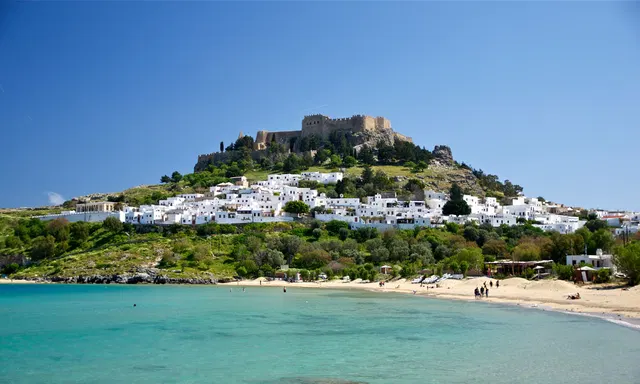
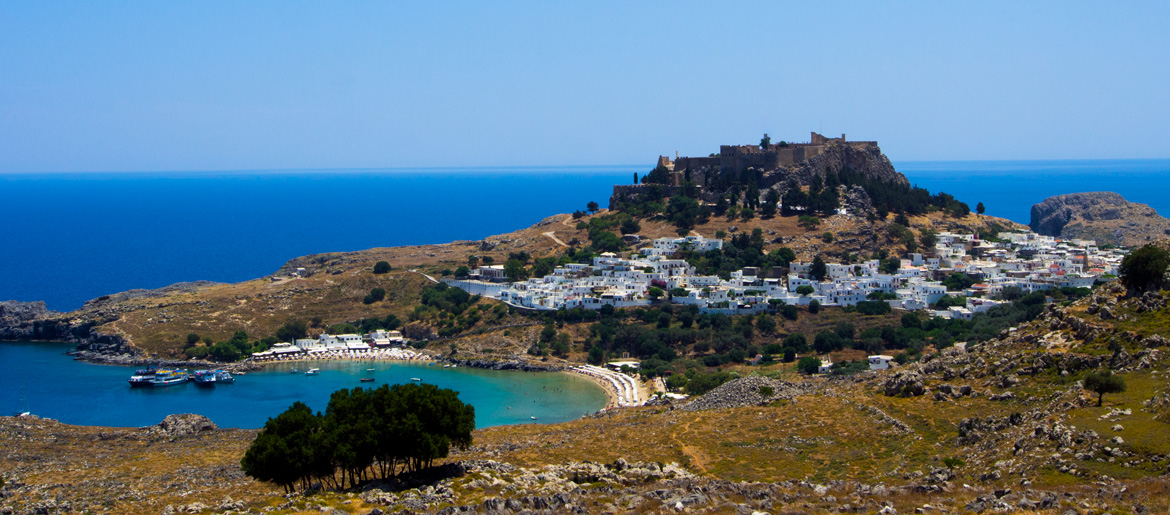
Rhodes is the largest of the Dodecanese — a long, narrow island sitting off the south-west coast of Turkey, about 250 km from Crete and 430 km from the Greek mainland. It has a continuous history of occupation since the third millennium BC, a UNESCO-listed medieval old town, eleven distinct beaches that show up on the postcards, and a hinterland of olive groves, pine forest and small wine villages that almost no tourist sees. Lindos sits roughly halfway down the east coast, in the country's most concentrated patch of cultural and natural value.
“Lindos sits roughly halfway down the east coast, in the country's most concentrated patch of cultural and natural value.”
02
Within walking distance
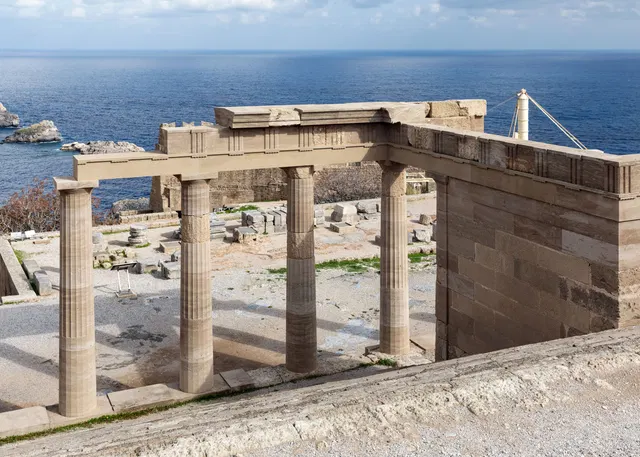
Within walking distance of the hotel: the Acropolis of Lindos sits 116 metres above the village on a limestone rock. The Doric temple of Athena Lindia at the summit dates to the late 4th century BC; the surrounding fortification walls were extended by the Knights Hospitaller of Saint John in the 14th and 15th centuries. The path up leaves from the main village square. The Hellenistic relief of a trireme carved directly into the rock at the base of the propylaea steps is one of the great surviving pieces of nautical sculpture. The view from the top — looking down to Saint Paul's Bay on the south side and the long sweep of village to the north — does most of the work in deciding that you want to come back.
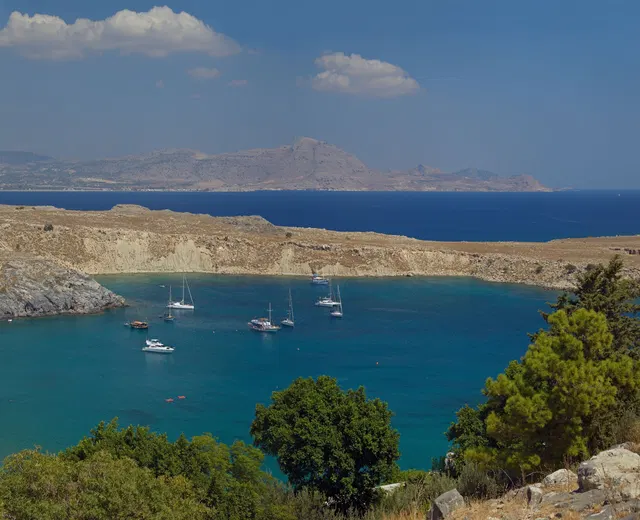
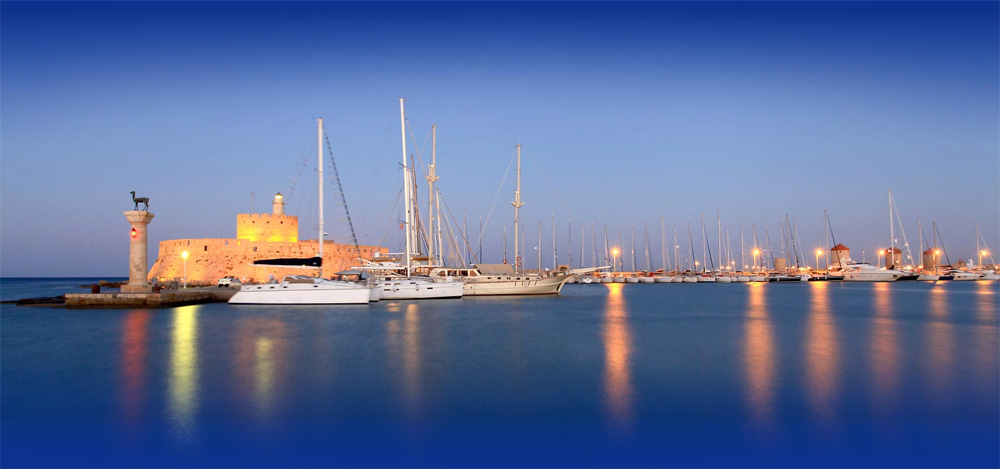
Five minutes' walk below the village is Saint Paul's Bay, a small, almost-enclosed cove on the south side of the Acropolis rock. Local tradition holds that Saint Paul landed here in AD 51; the whitewashed chapel above the cove is named for him. The water is shallow, warm, and protected from wind on all but the strongest south days. Ten minutes' walk in the other direction puts you on the main village beach — a longer, slightly busier stretch with sun-bed concessions and three tavernas.
03
Within a short drive
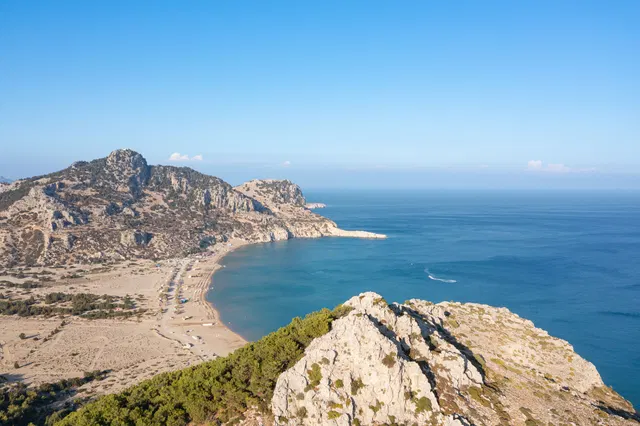
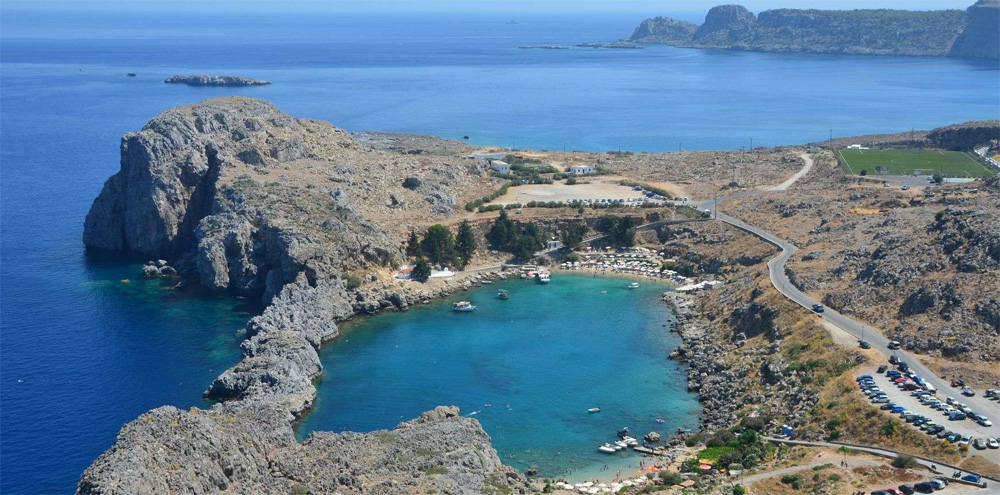
A twenty-minute drive north of Lindos is Tsambika Beach, the busiest family beach on Rhodes — a wide strip of fine golden sand on a gently shelving shoreline you can wade out fifty metres before the water reaches your shoulders. Above it, the Monastery of Panagia Tsambika sits on a headland reached by a 350-step climb to a tiny chapel with one of the best views on the island. The road north continues past Stegna, Archangelos, and Afandou — three places worth a half-day each.
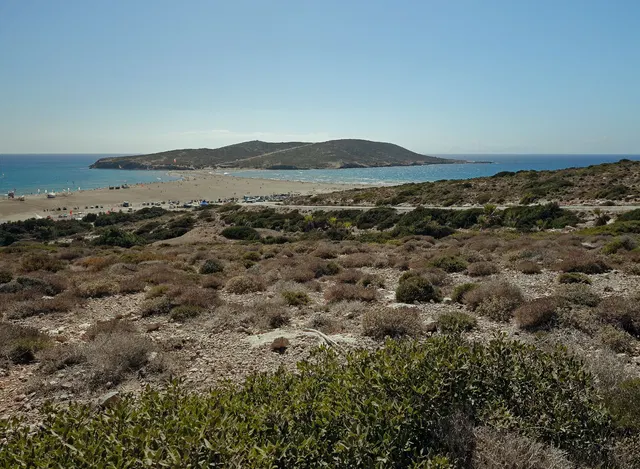
An hour's drive south, through the wine country and past the small inland villages of Gennadi, Lachania, and Mesanagros, is Prasonisi — the southern tip of the island, where the Aegean and the Mediterranean meet on a sand isthmus. The west side runs flat and choppy with a steady wind year-round, making it the best windsurfing and kitesurfing beach in Greece; the east side is glassy and quiet on the same day. The lighthouse at the tip dates to 1890.
The Valley of the Butterflies (Petaloudes), a thirty-five-minute drive north-west, is a shaded canyon with running water where Jersey tiger moths gather in extraordinary numbers in late June, July, and August. The valley is at its best on cooler weekday mornings; bring a hat and walking shoes.
“Walk fifty metres across the sand and you change ocean.”
04
Day trips
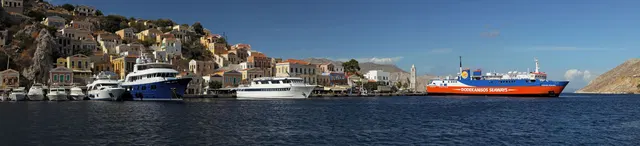
Off-island day trips, by ferry from Rhodes Town port: Symi is the obvious one — ninety minutes north and east, a small island ringed at the harbour by 18th and 19th-century neoclassical merchant houses painted ochre, blue, and terracotta, all rising up the hill in an amphitheatre. The houses were built by sponge-divers and ship-owners; the island was wealthier than Rhodes for most of the 19th century. Leave Rhodes port at eight, return around five; that gives you time to walk Gialos, climb the seven hundred Kali Strata steps to Horio, and eat the small grilled Symi shrimp at one of the harbour tavernas before the ferry back.
On Rhodes itself, the UNESCO-listed Medieval Old Town in Rhodes Town is the best-preserved medieval walled town in the Mediterranean. The Palace of the Grand Master, built originally in the 7th century and rebuilt by the Italians in the 1930s, holds the archaeological collection. The Street of the Knights, six hundred metres of cobbled lane lined with the original 14th and 15th-century inns of the Hospitaller knights, is the most photographed street in the Aegean. Allow most of a day for the old town; park outside the walls and walk in through the Marine Gate.
05
Food & timing
On food: Rhodes has its own cuisine, distinct from mainland Greek. Look for pitaroudia (small chickpea fritters), giouvarlakia (rice-stuffed meatballs in lemon broth), and the Lindos honey pies (melekounia) sold at the village bakeries. The local wine is from the Embonas slopes on the western side of the island — light, mineral, made primarily from the Athiri and Mandilaria grapes. The local cheese, sitaka, is made on the small island of Karpathos but you will find it on every Rhodes menu.
On timing: high season is July and August. The water is warmest, the village is at full energy, and you will share the Acropolis path with several thousand people each day. May, late September, and October are the months that locals prefer — the water is still warm, the village is calmer, and the hotel staff have time to talk. Winter Lindos is essentially closed; the village hibernates from November to mid-April.
On transport: the hotel sits 55 km from Rhodes International Airport (Diagoras), an hour's drive on a good road. Most guests rent a car at the airport — Rhodes is large enough that you need one to do anything beyond Lindos itself. Public buses run between Rhodes Town and Lindos several times a day but become impractical for spontaneous trips to Tsambika or Prasonisi. If you want to be carried, we can arrange a private driver for the full day at a fixed rate. Ask reception when you arrive.
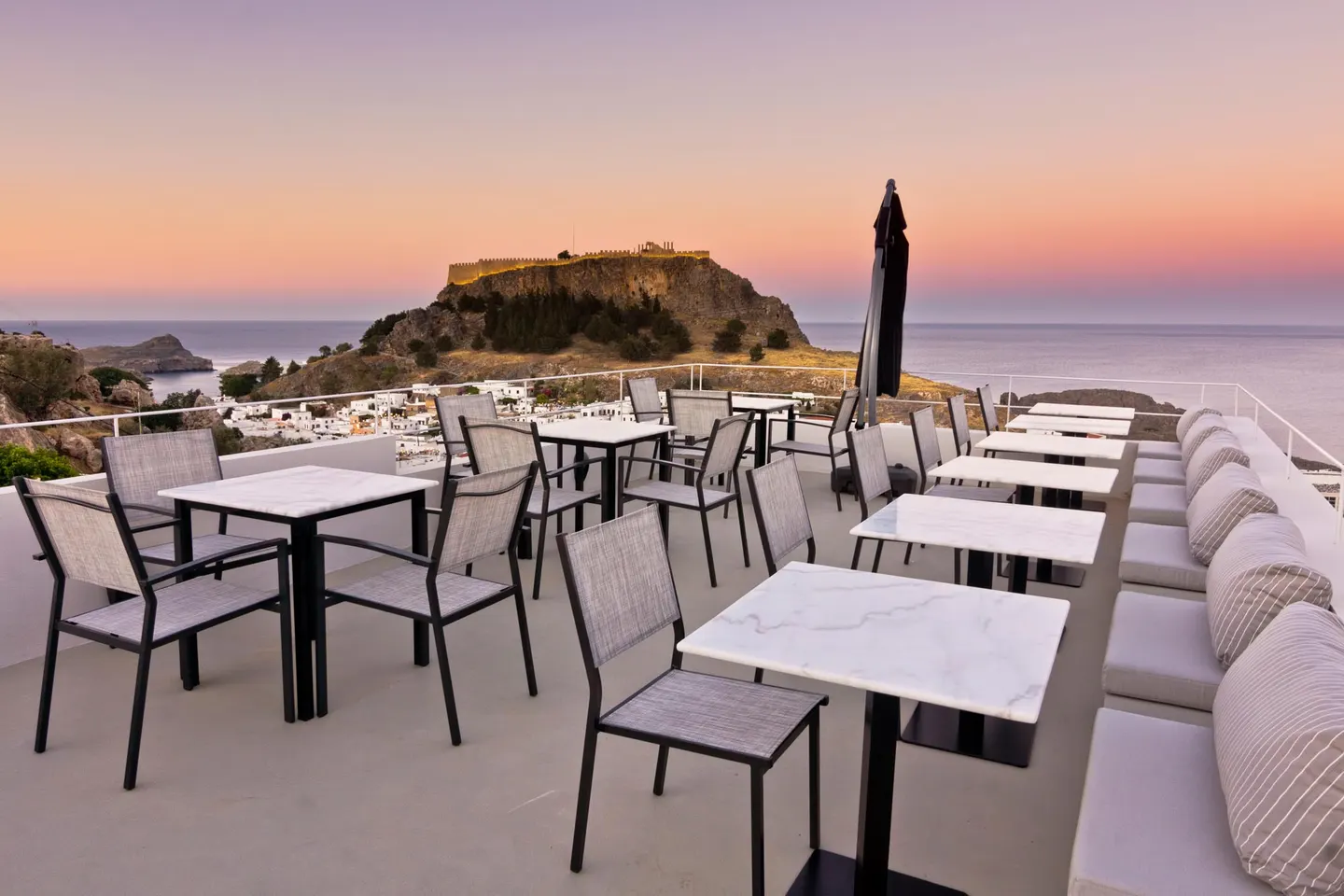
“The Acropolis is overhead; the Mediterranean is below.”